
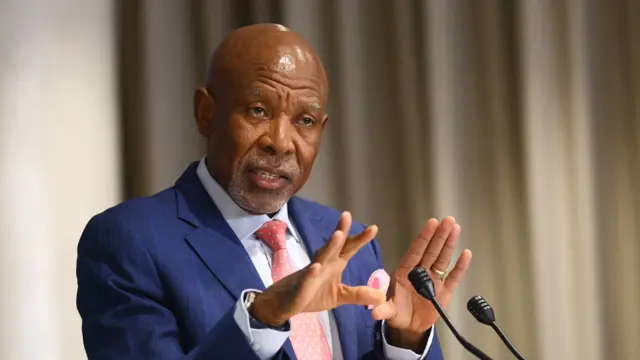
South African households are facing renewed financial pressure after the South African Reserve Bank (SARB) announced another increase in the repo rate while simultaneously lowering the country’s economic growth outlook.
The latest decision means consumers will continue paying more for home loans, vehicle finance and other forms of debt, at a time when many families are already struggling with the rising cost of living, high unemployment and expensive fuel and food prices.
The central bank said the decision to raise rates was aimed at containing inflation and keeping price increases under control. However, economists warn that the higher borrowing costs could place even more strain on consumers and businesses, slowing spending and investment across the economy.
Commercial banks are expected to increase their prime lending rates following the SARB announcement, which will directly affect monthly repayments for millions of South Africans. Homeowners with variable-rate mortgages are likely to feel the impact almost immediately, with repayments expected to rise further in the coming months.
The Reserve Bank also revised its economic growth forecasts downward, citing weaker global demand, persistent power supply challenges, infrastructure concerns and uncertainty in international markets. The lower growth expectations suggest the economy may struggle to create jobs and attract investment in the near future.
Analysts say the combination of slower growth and higher interest rates creates a difficult environment for both consumers and businesses. Small businesses in particular may find it harder to access affordable credit, while households could reduce spending on non-essential goods as disposable income comes under pressure.
Consumer groups have expressed concern that ordinary South Africans are carrying the burden of economic instability. Many households are already grappling with rising municipal tariffs, transport costs and increasing debt repayments, leaving little room for savings.
Despite the criticism, SARB maintains that controlling inflation remains necessary to protect the economy in the long term. The Reserve Bank has repeatedly warned that failing to manage inflation could result in even greater financial hardship for consumers if prices rise uncontrollably.
Economists remain divided on whether additional rate hikes will follow later this year. Some believe inflationary risks and global uncertainty could force the Reserve Bank to remain cautious, while others argue that continued increases may further weaken economic recovery.
The latest developments come as South Africa continues to battle sluggish economic growth, rolling infrastructure challenges and persistently high unemployment levels, with many citizens hoping for relief from mounting financial pressure.













 announced another increase in the repo rate while simultaneously lowering the country’s economic growth)