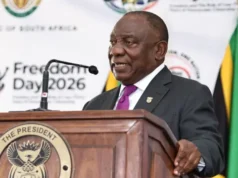
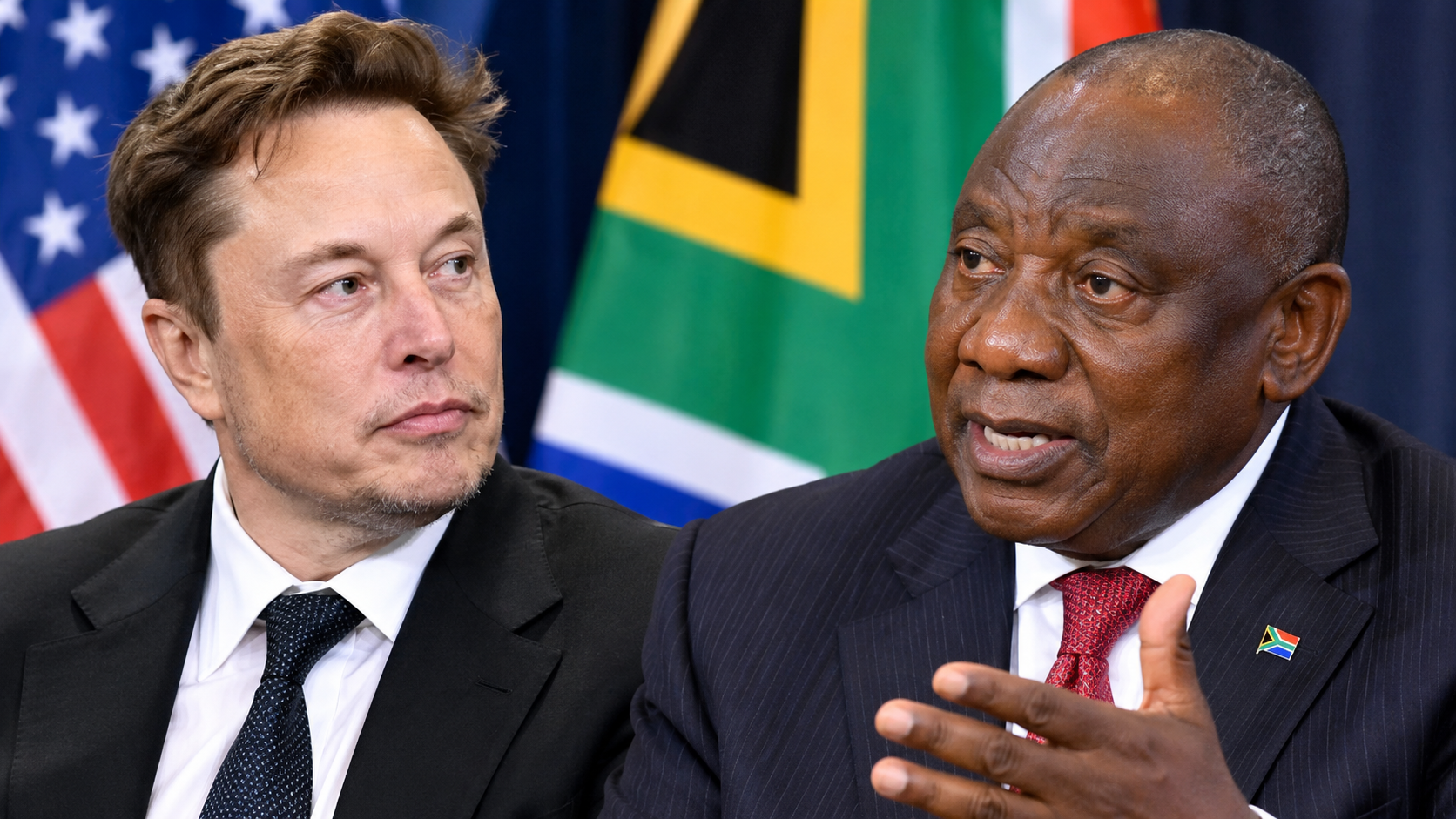
President Cyril Ramaphosa has challenged billionaire entrepreneur Elon Musk to remember his South African roots and contribute to the country’s development, arguing that the education and opportunities he received growing up in South Africa helped lay the foundation for his extraordinary success.
Ramaphosa made the remarks during an interview with ABC News chief Washington correspondent Jonathan Karl at the Semafor: Silicon Valley & The World engagement in California on Monday, 16 November 2026.
The president, who is currently leading a high-level South African delegation on a working visit to Silicon Valley, said he had previously met Musk and remained impressed by the technology entrepreneur’s achievements. However, he expressed a desire to speak to him about his connection to the country where he was born and raised.
Ramaphosa revealed that there had been discussions about arranging a meeting with Musk during his visit to the United States, but their schedules had not aligned.
He said that although Musk had become a citizen of another country, he should not forget where his journey began.
“I have met Elon Musk in the past, and I’ve been awed by his brilliance, but also I would like to chat to him about him remembering his country because even as one is a citizen of a new country, you should still be loyal to your old country,” Ramaphosa said.
Ramaphosa highlights apartheid’s education inequalities
The president’s comments come against the backdrop of ongoing tensions between Musk and the South African government over transformation policies, particularly Black Economic Empowerment (BEE) and legislation aimed at addressing inequalities created during apartheid.
During the interview, Karl questioned Ramaphosa about Musk’s previous criticism of South Africa’s policies, including his accusation that the government was creating “apartheid 2.0”.
Ramaphosa rejected the comparison, arguing that Musk did not fully appreciate the extent of the damage apartheid inflicted on black South Africans.
He explained that apartheid systematically favoured white citizens through legislation, institutional practices and unequal access to opportunities, particularly in education.
To illustrate the disparity, Ramaphosa compared the resources allocated to his education with those available to Musk during their respective school years.
“When the apartheid government spent R12 on his education, it spent R1 on my education,” Ramaphosa said.
He argued that understanding these historical inequalities was essential to understanding why South Africa continues to implement policies intended to address the consequences of apartheid.
Musk urged to invest in the country that shaped him
Ramaphosa also highlighted Musk’s early interest in technology, arguing that the knowledge and educational opportunities he received in South Africa contributed to his eventual success in the global technology industry.
Musk, who was born in Pretoria in 1971, attended school in South Africa before moving abroad to pursue further education and business opportunities.
The billionaire later became one of the world’s most influential technology entrepreneurs, building a business empire that includes Tesla, SpaceX, Neuralink and X.
According to Ramaphosa, the foundations of Musk’s technological interests were developed during his formative years in South Africa.
“When he started dabbling with these game machines, it is because of the knowledge and the education that was made available to him,” the president said.
He added that Musk should consider using his wealth, influence and business experience to support South Africa’s development.
“It is this endowment that he now has that was formed in South Africa, and he should be one of those who would say, I would like to contribute to the development of South Africa and give back to this country that made me who I am today,” Ramaphosa said.
Starlink’s South African ambitions remain a point of disagreement
The exchange also comes amid ongoing uncertainty surrounding the proposed entry of Musk’s satellite internet company, Starlink, into the South African market.
Starlink, operated by SpaceX, uses a network of low-Earth-orbit satellites to provide high-speed internet connectivity, particularly in areas where traditional fibre and mobile networks are limited.
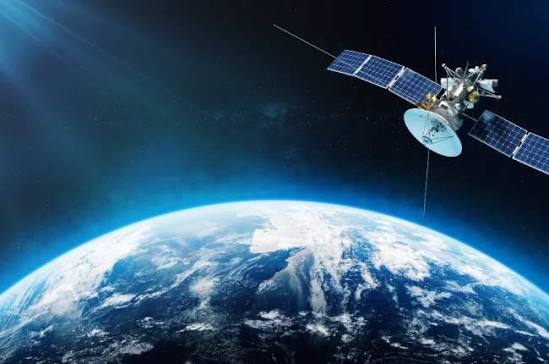
Its potential arrival in South Africa has attracted considerable interest, especially among rural communities, businesses and consumers looking for alternative internet services.
However, the company’s entry has faced regulatory challenges linked to South Africa’s telecommunications licensing requirements and transformation policies.
Musk has previously criticised the country’s empowerment framework, arguing that it creates barriers for companies seeking to operate in South Africa.
Ramaphosa confirmed that discussions had taken place with Musk and his representatives but maintained that international companies must comply with the laws and regulatory requirements of the countries in which they wish to operate.
“All countries have policies in terms of how they admit companies to operate. The United States has the same. It has its own policies, and when you want to come and operate here, you’ve got to subscribe to the policies of the country,” he said.
South Africa seeks stronger technology and investment partnerships
Ramaphosa’s visit to Silicon Valley forms part of a broader government effort to attract international investment, strengthen technology partnerships and improve South Africa’s participation in the global artificial intelligence economy.
The delegation is engaging with technology companies, investors and researchers to explore opportunities in artificial intelligence, innovation and digital infrastructure.
The president’s appeal to Musk therefore comes at a time when South Africa is seeking greater international investment while also defending its transformation policies.
Whether Musk will respond positively to Ramaphosa’s invitation to contribute to South Africa’s development remains to be seen.
However, the exchange highlights the complicated relationship between one of the world’s most influential technology entrepreneurs and the country where his journey began.