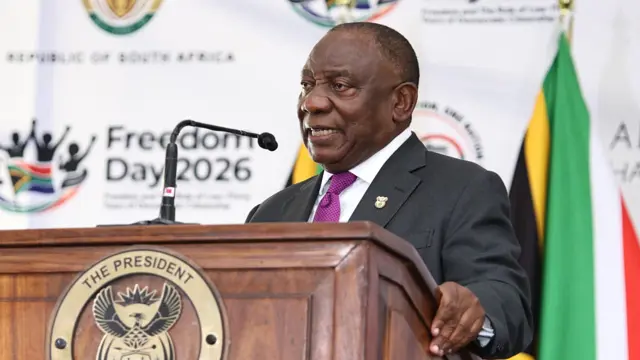
President Cyril Ramaphosa has used this year’s Freedom Day commemorations to spotlight the Free State’s deep historical significance, describing the province as a key birthplace of South Africa’s long journey to democracy.
Delivering the keynote address at the Dr Rantlai Molemela Stadium in Bloemfontein, Ramaphosa reflected on pivotal moments that shaped the country’s resistance against oppression. The national celebrations, held annually on April 27, mark the anniversary of South Africa’s first democratic elections in 1994—an event that symbolised the official end of apartheid and the dawn of a new constitutional order.
The president reminded attendees that Bloemfontein occupies a special place in the country’s political history. It was here, in 1912, that the African National Congress was founded, laying the groundwork for organised resistance against racial segregation and injustice. What began as a modest movement would grow into the leading force behind the struggle for liberation.
Ramaphosa emphasised that the province’s legacy is not only tied to political organisations but also to the courage of ordinary citizens—particularly women—who challenged discriminatory laws long before mass resistance took hold nationwide. He pointed to early protests in the then Orange Free State, where women mobilised against restrictive pass laws that sought to control their movement and undermine their dignity.
These demonstrations, initially localised, soon inspired broader defiance across the country. According to Ramaphosa, the actions of these women became a defining example of resilience, showing that grassroots activism could ignite a national movement. He noted that rather than succumbing to intimidation, many of these women intensified their resistance, refusing to accept a system that stripped them of basic rights.
“History shows us that the bravery displayed here in the Free State helped to fuel a wider struggle,” Ramaphosa said, adding that the sacrifices made by earlier generations should continue to guide the nation’s path forward.
Beyond reflecting on the past, the president also used the platform to address present-day challenges. He acknowledged that while political freedom has been achieved, many South Africans still face economic hardship, inequality, and limited access to opportunities. Freedom Day, he said, should serve as both a celebration and a moment of reflection on the work that remains.
Ramaphosa called for unity across all sectors of society, urging citizens, businesses, and government to work together to tackle unemployment, improve service delivery, and strengthen the economy. He stressed that the values of equality, dignity, and justice—central to the liberation struggle—must continue to shape policy decisions and national priorities.
The event drew thousands of attendees, including government officials, struggle veterans, and members of the public, all gathered to commemorate the country’s democratic milestone. Cultural performances and tributes to liberation heroes formed part of the programme, reinforcing the importance of remembering the sacrifices that led to South Africa’s freedom.
As the country reflects on more than three decades of democracy, Ramaphosa reiterated that the spirit of resistance born in places like the Free State remains relevant today. He concluded by encouraging South Africans to honour that legacy not only through remembrance, but through active participation in building a more inclusive and equitable society.